Northeast
Ocean Eddy Forecasts for Fishing
Track warm-core rings as they drift onto the Northeast shelf. See where giant bluefin tuna and bigeye are staging and plan safe weather windows for your offshore trips.
Buy Now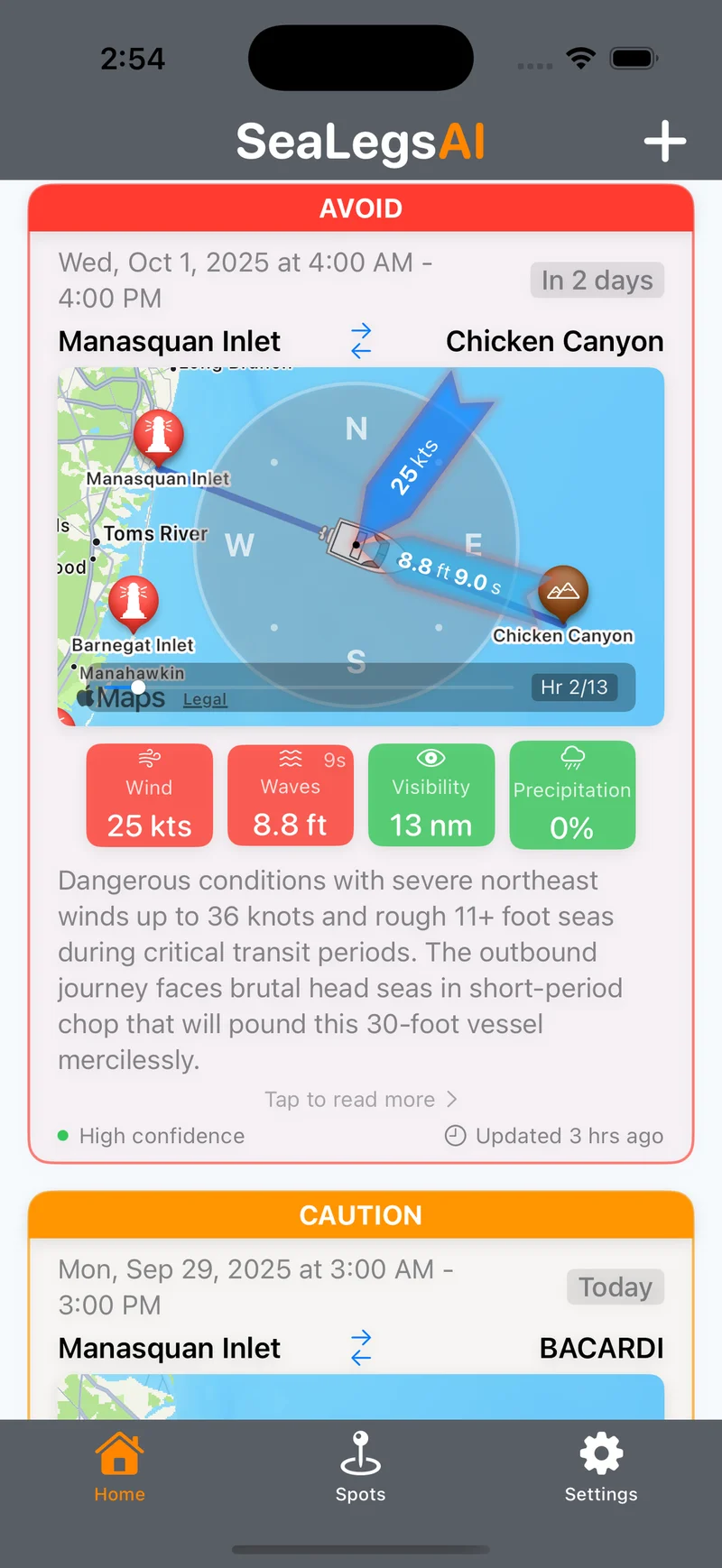
Warm-Core Rings: The Northeast's Tuna Magnets
The Northeast shelf is home to one of the world's great tuna fisheries, driven by warm-core rings that spin off the Gulf Stream and drift onto the continental shelf south of Georges Bank and Nantucket Shoals. These rings carry warm, clear, nutrient-rich Sargasso Sea water onto the shelf, creating dramatic temperature contrasts that attract massive aggregations of baitfish — sand lance, herring, mackerel, and squid.
Giant bluefin tuna, bigeye tuna, yellowfin tuna, and albacore follow these bait concentrations to the ring edges, creating some of the most exciting offshore fishing in the North Atlantic. The peak season runs from July through October, with giant bluefin being the primary draw. Key departure ports include Gloucester, Massachusetts; Point Judith, Rhode Island; and Montauk, New York.
EddyCast scores every warm-core ring out of 100 for fishing potential and assigns GO, CAUTION, or AVOID weather ratings so you know which rings are fishable right now. Each report includes SST maps with thermal gradients, per-eddy details (thermal break, radius, rotation speed, core temperature), target species, "Where to Fish" and "Tactics" guidance, and a "Best Day" recommendation with the safest weather window.
Northeast Features
Purpose-built tools for tracking warm-core rings and bluefin tuna on the Northeast shelf.
Fishing Score per Ring
Every warm-core ring gets a Fishing Score out of 100 based on thermal break strength, rotation speed, and bait potential. The regional overview highlights the "Top Pick" ring so you know where to focus.
GO / CAUTION / AVOID Ratings
Each ring gets a color-coded weather safety rating — the same GO, CAUTION, and AVOID system you know from SeaLegsAI. See at a glance which rings have safe weather windows and which to skip.
SST Maps & Ring Details
Visualize sea surface temperature maps with thermal gradient overlays. Drill into each ring for coordinates, thermal break (in degrees F), radius (km), rotation speed (kts), and core temperature.
Target Species & Tactics
Each ring report lists target species (giant bluefin, bigeye, yellowfin, albacore) with "Where to Fish" positioning guidance and recommended tactics. Plus a "Best Day" pick with the optimal weather window.
EddyCast Pricing
Choose the plan that fits your fishing schedule.
- Fishing Score per eddy (/100)
- GO/CAUTION/AVOID weather rating
- SST map with thermal gradients
- Target species & tactics
- Unlimited eddy forecasts
- "Best Day" recommendations
- Per-eddy detail & coordinates
- "Where to Fish" guidance
- Priority support
- Everything in Monthly
- Save 42% vs monthly
- Multi-region access
- Regional "Top Pick" highlights
- Early feature access
Northeast EddyCast FAQ
How do warm-core rings affect fishing on the Northeast shelf?
Warm-core rings that spin off the Gulf Stream drift onto the continental shelf south of Georges Bank and Nantucket Shoals. These rings bring warm, clear, nutrient-rich water from the Sargasso Sea onto the shelf, attracting massive schools of baitfish like sand lance, herring, and squid. Giant bluefin tuna, bigeye tuna, and yellowfin follow the bait to the ring edges, creating some of the best tuna fishing in the world.
When is the best time for giant bluefin tuna on the Northeast shelf?
Giant bluefin tuna fishing peaks from July through October on the Northeast shelf. The fish migrate north following warm-core rings and bait concentrations. August and September are typically the most productive months, especially when warm-core rings are positioned close to the shelf edge near Georges Bank or south of Nantucket. EddyCast tracks ring positions so you know exactly when and where to target giants.
How long do warm-core rings remain productive for fishing?
Warm-core rings can persist for weeks to months as they drift westward across the shelf. However, they gradually lose their thermal signature as they mix with surrounding shelf water. The most productive fishing occurs during the first few weeks after a ring moves onto the shelf, when the temperature contrast is sharpest. As rings decay, the edges become less defined and fish disperse. EddyCast monitors ring strength and age to help you focus on the most productive features.
What ports are best for targeting Northeast warm-core rings?
The top ports for ring fishing in the Northeast include Gloucester, Massachusetts; Point Judith, Rhode Island; and Montauk, New York. Gloucester offers the closest access to Georges Bank ring interactions. Point Judith provides access to the shelf south of Nantucket. Montauk covers the western edge of the Northeast shelf. Your best port depends on current ring positions, which EddyCast monitors in real time.
Explore Other Regions
EddyCast Overview
Learn about EddyCast AI ocean eddy forecasting for offshore fishing.
US East Coast
Gulf Stream warm-core rings for tuna, marlin, and mahi-mahi.
US West Coast
California Current eddies for albacore, yellowfin, and dorado.
Gulf of Mexico
Loop Current eddies for bluefin tuna, yellowfin, and wahoo.
Southeast US
Gulf Stream eddies for sailfish, mahi-mahi, and tuna.
Hawaii
Island wake eddies for yellowfin, bigeye, and Pacific blue marlin.
Mediterranean
Algerian Current eddies for Atlantic bluefin tuna.
Eastern Australia
East Australian Current eddies for marlin, yellowfin, and southern bluefin.
South Africa
Agulhas Current eddies for yellowfin tuna, marlin, and swordfish.
Get Northeast Eddy Forecasts
Be the first to access EddyCast when it launches. AI-powered warm-core ring tracking and weather intelligence for Northeast tuna fishing.
Buy Now