Australian marine weather has its own vocabulary. The forecast doesn't just say "wind from the south" — it says Southerly Buster, and every boater on the New South Wales coast knows exactly what that means for the afternoon. Learn the handful of named winds and the inverted summer calendar, and the Australian coast becomes a lot more readable.
This is a boater's tour of the winds and systems that actually decide whether you go: the ones that build on a hot afternoon, the ones that form offshore and turn dangerous fast, and the patch of water that's rougher than its wind speed has any right to be.
The Southerly Buster (east coast summer)
The Southerly Buster is the signature wind of the NSW coast in spring and summer. After a hot day on a northwesterly airstream — the dry, hot desert wind sometimes called a brickfielder — a cold front drives a sudden, gusty southerly change up the coast, usually in the late afternoon or evening. The Bureau of Meteorology defines a buster as a southerly gusting over 29 knots (54 km/h) with a temperature drop of at least 5°C in three hours; the strongest on record have gusted past 60 knots. Sydney averages about five a year, and the change can strip 10–15°C off the air in minutes while throwing up a short, steep sea against the warm conditions ahead of it.
It's the classic east-coast trap: you leave on a flat, hot morning and come back into a 25–35 knot southerly with a nasty chop. The change is usually forecast, but the timing is the hard part — a Buster that's "this evening" can arrive two hours early.
East Coast Lows — the dangerous one
An East Coast Low (ECL) is the most dangerous marine system on the eastern seaboard. These intense low-pressure systems form off the NSW coast and can deepen explosively, bringing gale-to-storm-force winds, torrential rain, and large, breaking seas. They can spin up at any time of year, but they're most common in autumn and winter — most often around June, with about seven or eight a year on the eastern seaboard.
The danger is the speed and the sea state: an ECL can turn a manageable forecast into a survival situation within a day, and the seas it builds — often against a strong current — are exactly the kind of rough, breaking water that's most hazardous to small craft.
Treat the whole window with suspicion, not just the peak. ECLs are notorious for arriving earlier and deeper than first forecast. If one is on the charts for your area, the safe call is usually to stay in — and to have already moved the boat to good shelter.
Sea breezes: the nor'easter and the Fremantle Doctor
Not every named wind is a threat — some are so reliable you can plan around them. On the east coast, summer afternoons bring the northeasterly sea breeze (the "nor'easter"): a pleasant 10–20 knot onshore wind that builds through the day and drops at evening.
The west coast has the famous version. The Fremantle Doctor — "the Doctor" — is a strong, dependable southwesterly sea breeze that cools Perth and the southwest WA coast on hot summer afternoons, typically 15–20 knots and filling in from late morning to mid-afternoon. It is so reliable it defines WA summer sailing: glassy mornings, a building afternoon breeze, and a known time to be heading back in. Further along the coast it has cousins — the Albany and Esperance Doctors.
Across much of southern Australia, summer days follow a pattern: calm, hot mornings, a sea breeze that fills in during the afternoon, and an evening drop. Plan the rough leg of a trip for the morning, and know when the breeze — or the Buster — is due to fill in.
Cyclone season in the north (November–April)
While the south enjoys its boating season, the north runs a very different calendar. The Australian tropical cyclone season runs officially from 1 November to 30 April, affecting the northern coasts of Western Australia, the Northern Territory, and Queensland. A tropical cyclone — or even a tropical low that never reaches cyclone strength — can bring destructive winds, torrential rain, and storm surge with a few days' notice.
For anyone boating in the north over summer, the Bureau of Meteorology's tropical cyclone outlooks are not optional reading. The window where the southern season is at its best is exactly when the north is most exposed.
Bass Strait and the Roaring Forties
Bass Strait, the stretch between the mainland and Tasmania, punches well above its wind speed. It's shallow — averaging only about 50–70 metres — and it sits squarely in the path of the Roaring Forties, the band of strong, persistent westerlies that circle the Southern Ocean. When those westerlies funnel through the strait, the shallow bottom piles up steep, short-period seas; long Southern Ocean swell then meets shorter Tasman swell to throw up confused, crossing seas, and strong tidal currents make it worse still. The water is routinely far rougher than the forecast wind would suggest.
It's the reason the Sydney to Hobart has its fearsome reputation, and the reason a Bass Strait crossing demands a genuine weather window, not just a good-looking day. Short fetch in a strong wind still builds a vicious sea — and here the wave period, not just the height, is what beats up a boat.
Heading out on the Australian coast? Check these 3 things first.
- The timing of any wind change — a Southerly Buster or front can land hours before the headline says.
- Wave height and period for your exact spot — short-period sea is what makes Bass Strait and a Buster chop dangerous.
- A clear Go / Caution / Avoid call for your launch and the time you'll be on the water.
The Australian boating calendar, at a glance
| Region | Summer (Oct–Mar) | Watch for |
|---|---|---|
| East coast (NSW/QLD) | Nor'easter sea breeze; settled highs | Southerly Buster; East Coast Lows |
| Southwest (WA) | The Fremantle Doctor most afternoons | Strong sea-breeze days; offshore swell |
| Bass Strait / Tas | Windows between fronts | Roaring Forties; steep short-period seas |
| North (WA/NT/QLD) | Wet-season heat and storms | Tropical cyclones (Nov–Apr) |
Reading it before you go
The hard part of Australian conditions isn't knowing the names — it's that a single zone forecast can't tell you whether the Buster has reached your beach yet, or whether the swell wrapping into your bay is the part to avoid. A "winds southerly 25 knots" forecast covers a huge area and a long window.
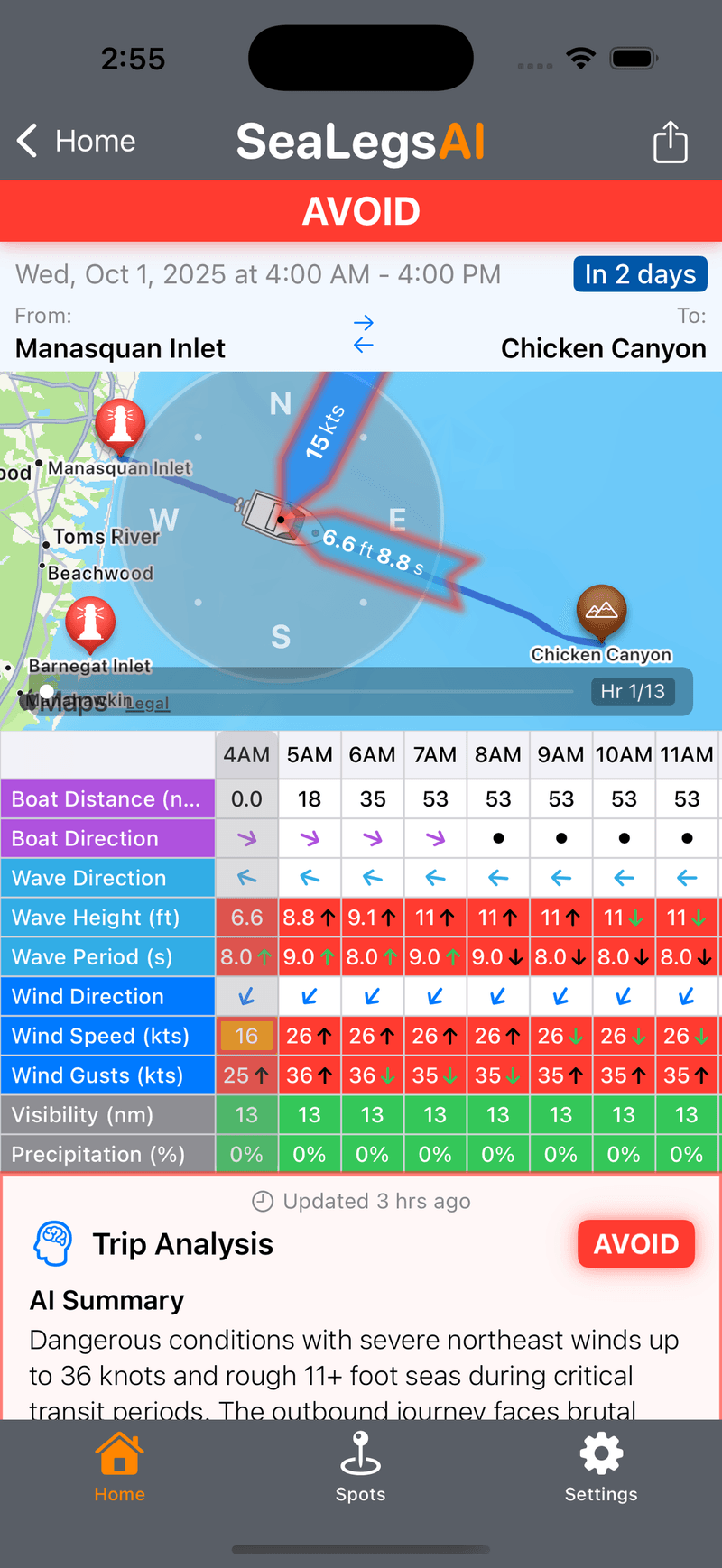
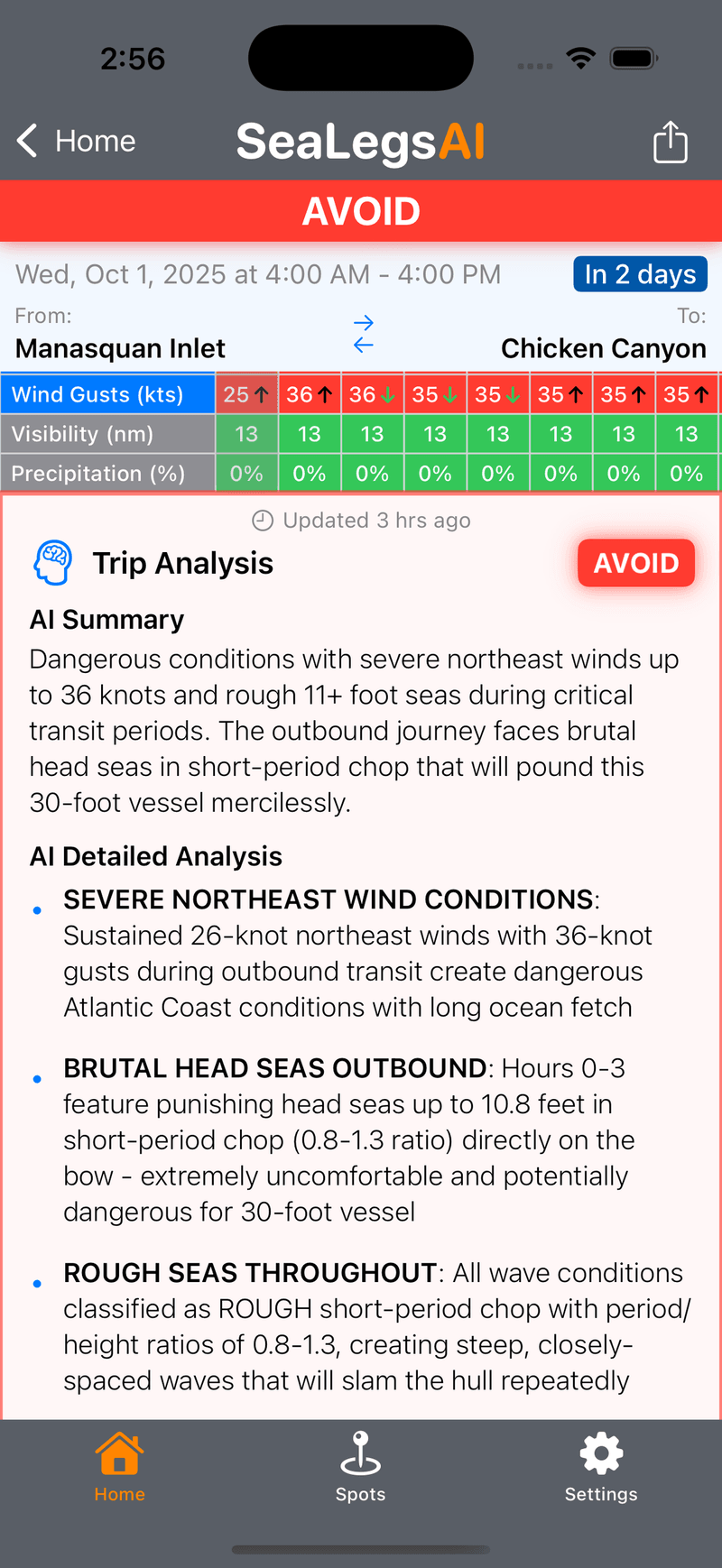
SeaLegs AI narrows it to your trip: point-specific wind, gust, wave height, and wave-period forecasts for your exact launch spot and departure time, turned into a plain Go, Caution, or Avoid call. The forecast names the wind; SeaLegs tells you what it's doing to the water where you'll actually be.
The bottom line
- The Southerly Buster is the east-coast summer trap — a sudden southerly change of 30 kt+ that turns a hot, calm day rough in minutes.
- East Coast Lows are the most dangerous system — explosive offshore lows, worst Apr–Aug but possible year-round.
- Sea breezes — the nor'easter (east) and the Fremantle Doctor (WA) — are reliable enough to plan around.
- Cyclone season (Nov–Apr) rules the north exactly when the south is at its best — the calendar is split.
- Bass Strait is rougher than its wind speed: shallow water under the Roaring Forties builds steep, short-period seas.
- The season is inverted (summer Oct–Mar) — and a point forecast for your exact spot beats any zone average.